
Principles for Peace Conducts High-Level Engagements Across Israel and Palestine
Against the backdrop of the Iran-Israel conflict, the stalling of Gaza Phase II, and political transition on both sides, Principles for Peace recently completed a series of high-level engagements across Israel and Palestine, advancing its country accompaniment work and reinforcing constituencies for a credible political path ahead.
Meeting Palestinian Leadership

Principles for Peace was in Palestine to meet Palestinian leadership and civil society partners as part of its country accompaniment work: listening to Palestinian priorities, supporting Palestinian-led dialogue, and working with partners to identify practical openings that can strengthen institutions and reconnect political and civic spaces.
During the mission, P4P Executive Director Hiba Qasas met with President Mahmoud Abbas, Vice President Hussein al-Sheikh and Prime Minister Mohammad Mustafa, an important opportunity to hear directly from the Palestinian leadership on the priorities facing the Palestinian people, the pressures on Palestinian institutions, and the need to protect a credible political path ahead.

Hiba Qasas also met with Dr. Laila Ghannam, Governor of Ramallah, whose leadership and commitment to public service is deeply clear. The exchange touched on the realities facing Palestinian communities, the urgent threat of settler violence, and the importance of grounded local leadership in this moment.
Engagements in Israel on Behalf of USF
Principles for Peace also completed a series of engagements in Israel on behalf of Uniting for a Shared Future (USF), the largest pragmatic Israeli-Palestinian leadership coalition, bringing together more than 550 leaders from politics, business, security, media and civil society.
Together with the Geneva Initiative, P4P convened a diverse group of civil society leaders, journalists, former diplomats, researchers and public figures to examine the evolving regional landscape, focusing on how emerging regional opportunities can be translated into concrete political, economic, and security gains, and how to strengthen constituencies for diplomacy and public support for implementation-oriented approaches.
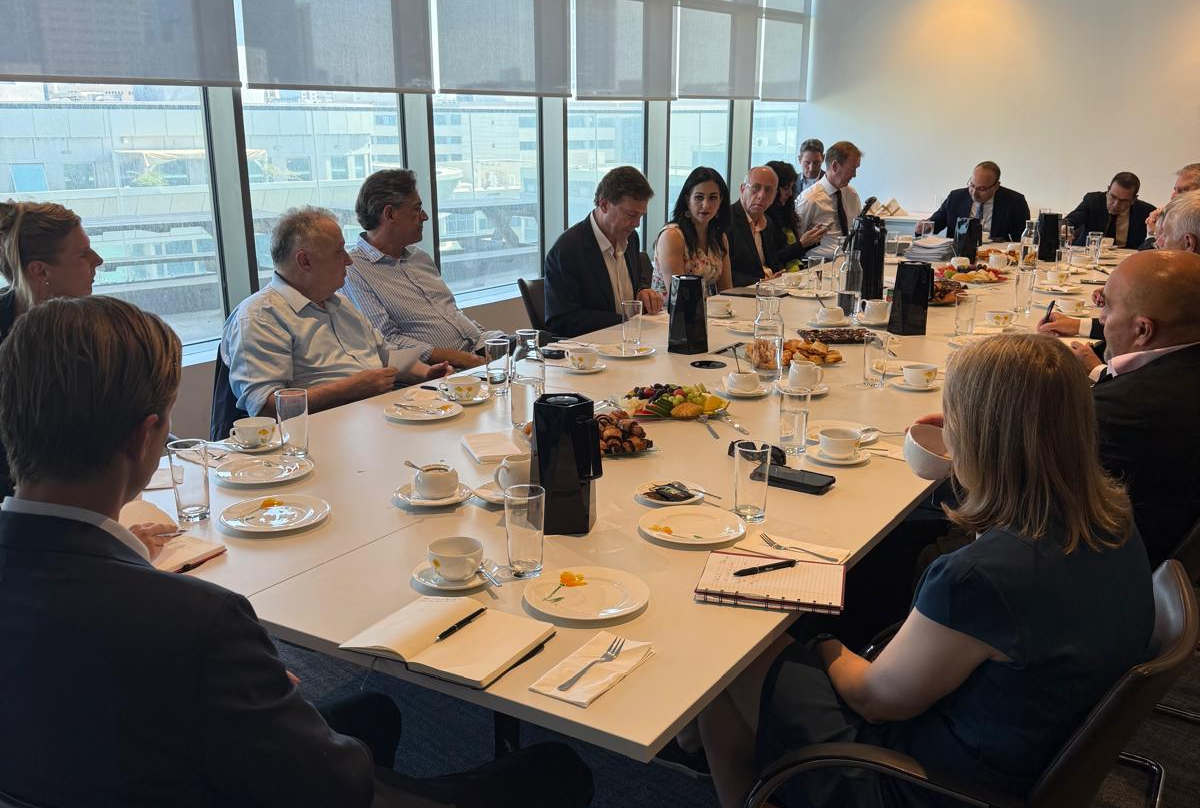
Photo: German Embassy in Tel Aviv
Germany hosted a related briefing at its embassy, bringing together ambassadors and representatives from across European and regional missions as well as members of the USF coalition, and P4P thanks Germany for its consistent support to P4P and USF.
Throughout the visit, P4P additionally conducted extensive meetings with Members of Knesset, security experts, political strategists and emerging political leaders to assess risks and opportunities and explore practical pathways for stabilization, recovery, and a broader political horizon within a regional framework.
Across all engagements, one message emerged clearly: while political conditions remain challenging and fragile, there is growing recognition that regional opportunities must be matched by practical implementation strategies, sustained international engagement, and stronger constituencies capable of carrying forward a viable political horizon.
A Societal Dialogue in Ramallah
At a critical moment for Palestine, Principles for Peace, in partnership with the Palestinian Peace Coalition, also convened more than 80 Palestinian leaders, policy voices, journalists, young people, women leaders, business and community actors in Ramallah.
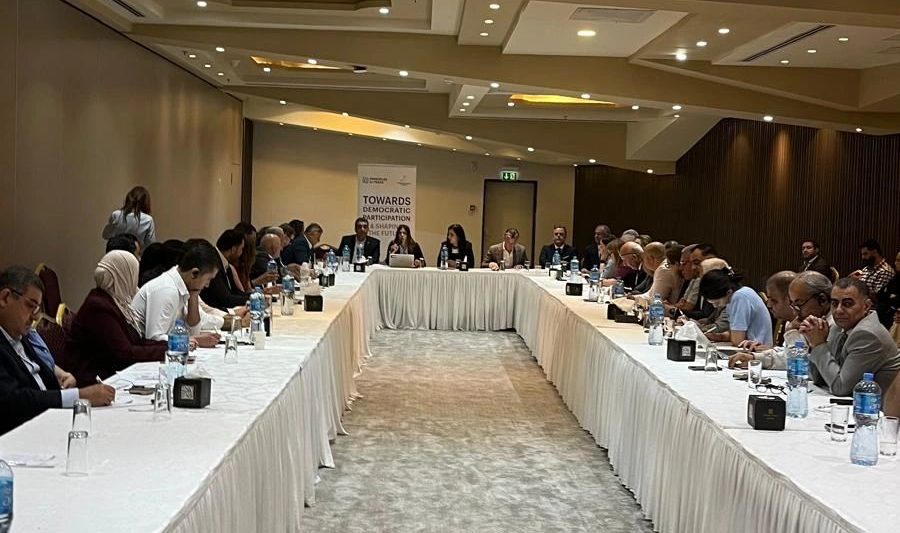
The discussion brought together Dr. Omar Awadallah, Deputy Minister of Foreign Affairs, Dr. Dalal Iriqat, Professor of Diplomacy and Fatah Revolutionary Council Member, Nidal Foqaha, Director General of the Palestinian Peace Coalition, and P4P Executive Director Hiba Qasas, with opening contributions and engagement from H.E. Anick Van Calster, Representative of Belgium to Palestine, H.E. Anne-Lise Cattin Hennin, Representative of Switzerland in Ramallah, H.E. Michel Rentenaar, Dutch Representative in Ramallah, and H.E. Feilim McLaughlin, Representative of Ireland to Ramallah.
Participants focused on what is needed now: reconnecting Gaza and the West Bank, rebuilding trust between institutions and people, linking Palestinian and regional efforts, and supporting a credible political path ahead. As Hiba Qasas underlined in closing, the situation in the West Bank continues to deteriorate, with occupation, rising settler terrorism, restrictions on movement and the fiscal strangulation of the Palestinian Authority placing increasing pressure on Palestinian communities and institutions.
This convening is one step in P4P’s wider Palestine country accompaniment work, and P4P is grateful to all partners, participants and co-hosts for the clarity and commitment they brought to the conversation.
